Automated Aliquoting System (AAS)
Automated Aliquoting for Critical Single-Use Workflows
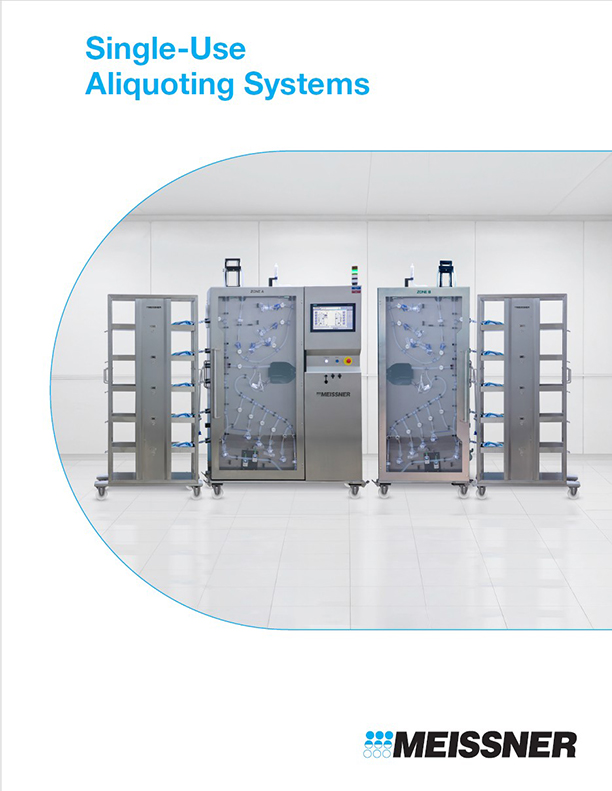
The Automated Aliquoting System (AAS) standardizes the transfer of bulk product into final single-use containers through automated, recipe-driven execution. Designed for biopharmaceutical manufacturing, the AAS delivers consistent fill accuracy, enhanced process control, and digital batch documentation across critical aliquoting operations.
The challenge with manual aliquoting
Manual aliquoting introduces the same categories of risk regulators have flagged across aseptic processing generally: inconsistent technique between operators, extended intervention time in classified areas, and a training burden that scales with every new product or container format. As batch counts and product variety increase, manual aliquoting becomes a bottleneck as well as a risk.
What the AAS Delivers
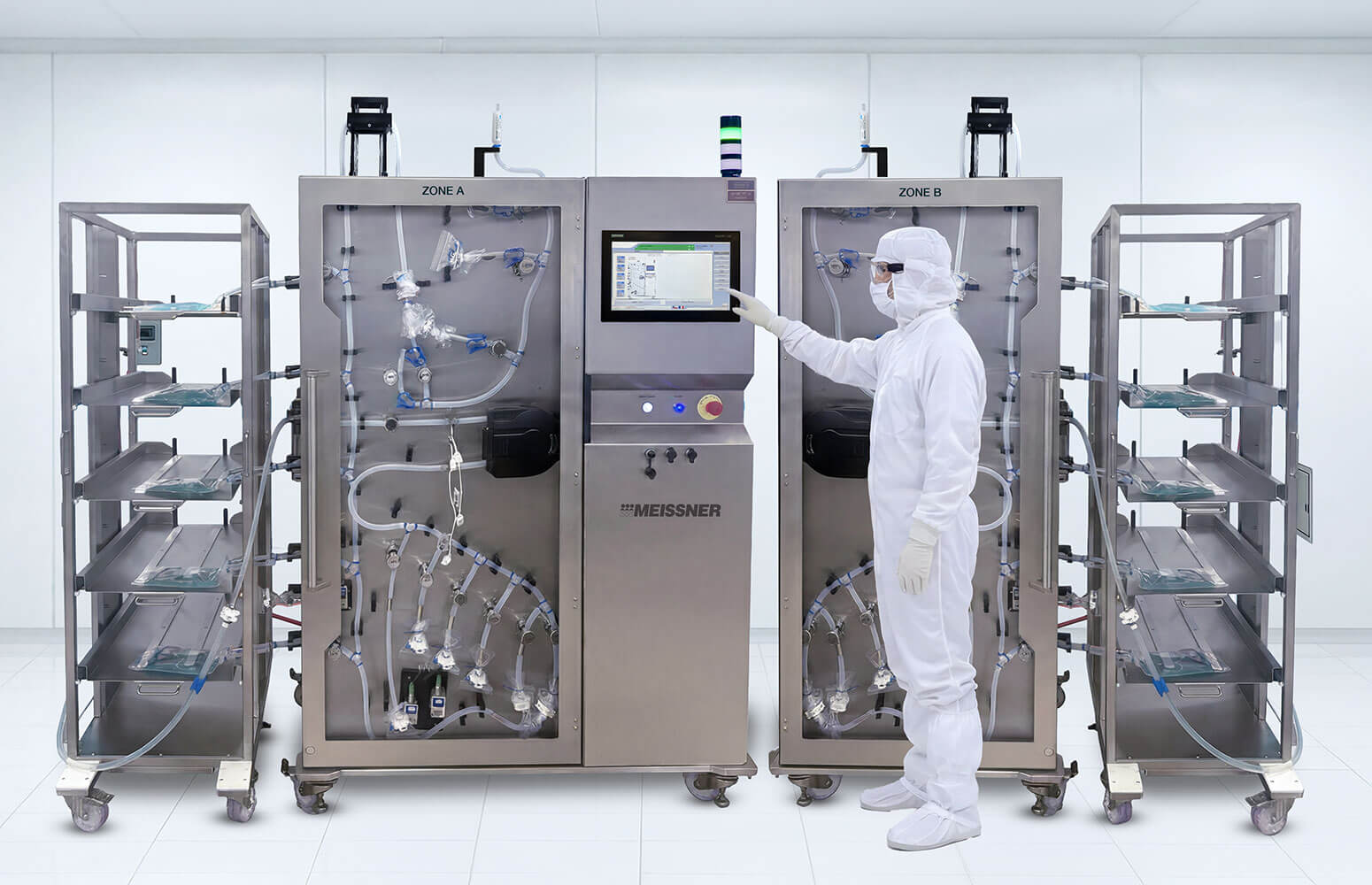
The Automated Aliquoting System automates the transfer of bulk product into final single-use containers, whether bottles, biocontainers, or other primary packaging formats, replacing manual weighing, valve operation, and container handling with a repeatable, recipe-driven process and accurate batch records. The results are consistent, precision filling across operators, shifts, and batch sizes to support contamination control and operational efficiencies.
Key benefits
- • Consistent fill accuracy across batches, operators, and shifts
- • Automated, recipe-driven workflow execution
- • Enhanced process control and operational efficiency
- • Rapid changeovers between container formats and batch sizes
- • Electronic records supporting data integrity, traceability, and review-by-exception workflows
- • Seamless integration with Meissner single-use technologies, including single-use biocontainer assemblies, FlexFill® transfer assemblies, M-Sil™ silicone and M-Flex® TPE tubing assemblies
Supporting Annex 1’s contamination control expectations
While EU GMP Annex 1 does not name aliquoting specifically, its core principles apply directly to minimizing direct human intervention in Grade A operations, maintaining a documented Contamination Control Strategy (CCS) across every critical step. Using automation and robotics where they can remove operator-dependent risk, the AAS is designed around those same principles, extending the standardization and control Annex 1 already expects for PUPSIT and filtration to the aliquoting step as well.
Built on Meissner’s single-use systems expertise
The AAS works seamlessly with Meissner’s standard single-use systems portfolio with customizations available to ensure optimization of the supporting fluid path.
Frequently Asked Questions
What is the Automated Aliquoting System (AAS)?
The AAS is an automated system (capital equipment) that dispenses biopharmaceutical fluids into single-use biocontainers, a process known as aliquoting. Automated, monitored dispensing reduces manual handling and supports more consistent and complete batch documentation.
Is automation required for aliquoting?
Automation is not explicitly required by GMP guidance such as EU GMP Annex 1. However, Annex 1 emphasizes contamination control and minimizing direct operator intervention. Automating the process helps reduce manual interventions, process variability, and transcription errors.
Can the AAS be customized for my process?
Yes, the AAS can be configured for different final container formats, such as bottles, biocontainers, and CryoVault® freeze/thaw containers, to support consistent, repeatable fills. Meissner offers both standard and custom single-use assemblies to fit your process requirements.
How does the AAS handle records and documentation?
The AAS software is designed to support 21 CFR Part 11 requirements. It generates and stores electronic batch records and audit trails to support data integrity and traceability. Final compliance depends on how the system is implemented, validated, and controlled at your site.
Which Meissner products are compatible with the AAS?
The AAS is designed to work with Meissner’s One-Touch® single-use systems, including TepoFlex® biocontainers and sample containers, FlexFill® transfer assemblies, M-Sil™ or M-Flex® tubing, and CryoVault® freeze-and-thaw containers.
What are the dimensions of the AAS?
It’s compact and easy to move. It’s approximately 5.9 feet (1.8 m) tall, 5 feet (1.52 m) wide, and 2.7 feet (0.82 m) deep, including wheels. If you add carts for separate fills, each cart is about 5.9 feet (1.8 m) tall, 3.3 feet (1.01 m) wide, and 2.75 feet (0.84 m) deep.