Tangential Flow Filters (SepraPor®)
Let's talk.
Send a message to our
industry experts.
SepraPor®
Let's talk.
Send a message to our
industry experts.
SepraPor®
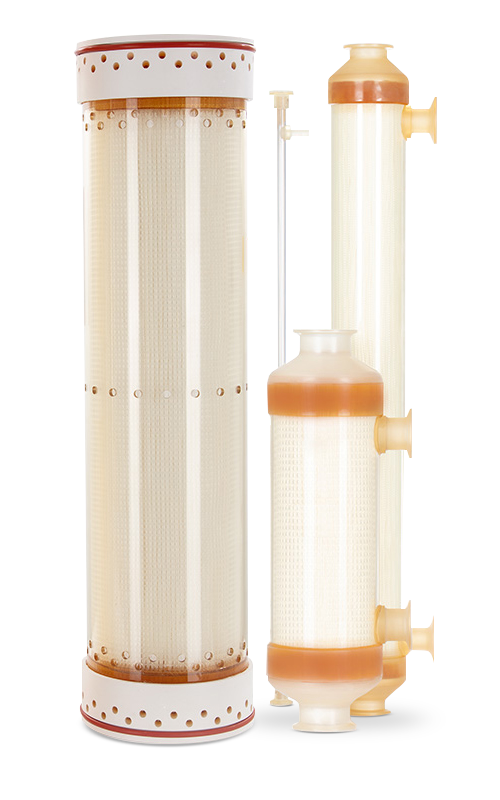
SepraPor® Tangential Flow Hollow Fiber Filters Are Available in Cartridge and Capsule Configurations.
SepraPor® are tangential flow filter devices containing microporous hollow fiber membranes (HFM). SepraPor® devices are ideal for use in a variety of biopharmaceutical applications, including bacterial cell concentration, mammalian cell concentration, yeast concentration, and continuous cell culture perfusion. SepraPor® filters are available in a range of sizes in both capsule and cartridge formats. Cartridges are designed to fit inside stainless steel housings for steam-in-place (SIP) sterilization and operation. Capsules are available as standalone filters or as part of process-ready, gamma-sterilized assemblies. Capsule and cartridge filters are both designed to withstand the rigors of autoclave, SIP, or gamma sterilization.
Which SepraPor® Tangential Flow Filter Should You Use?
Our interactive Shear Rate Calculator tool will calculate the shear rate for a given filter diameter and recirculation (volumetric flow) rate to help you determine the optimal SepraPor® filter size for your application.

Shear Rate Calculator
Calculate hollow fiber shear rate for a given filter diameter & recirculation (volumetric flow) rate.

Fiber Inner Diameter: 1 mm
Filter Diameter: in
Shear Rate: s-1
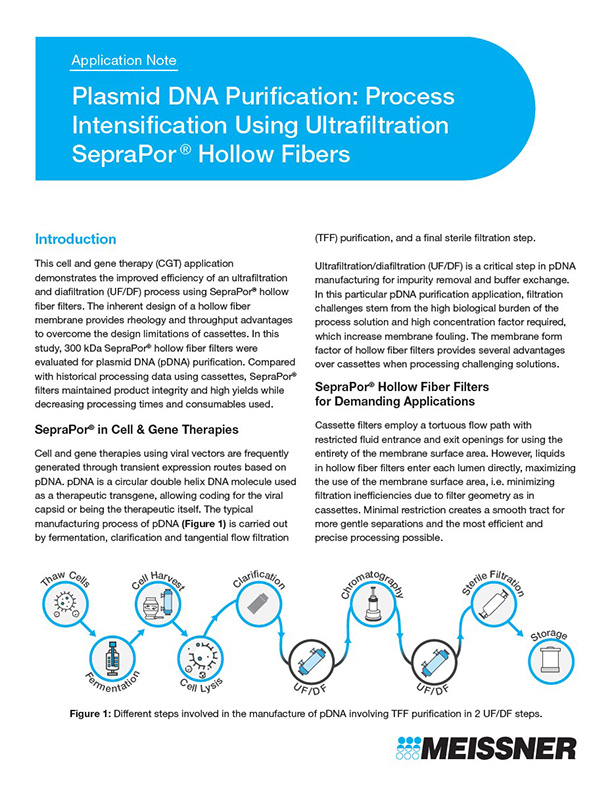
Cell Culture Perfusion, Cell Concentration, and High Productivity Harvest Using SepraPor®
Additional SepraPor® Hollow Fiber TFF Videos

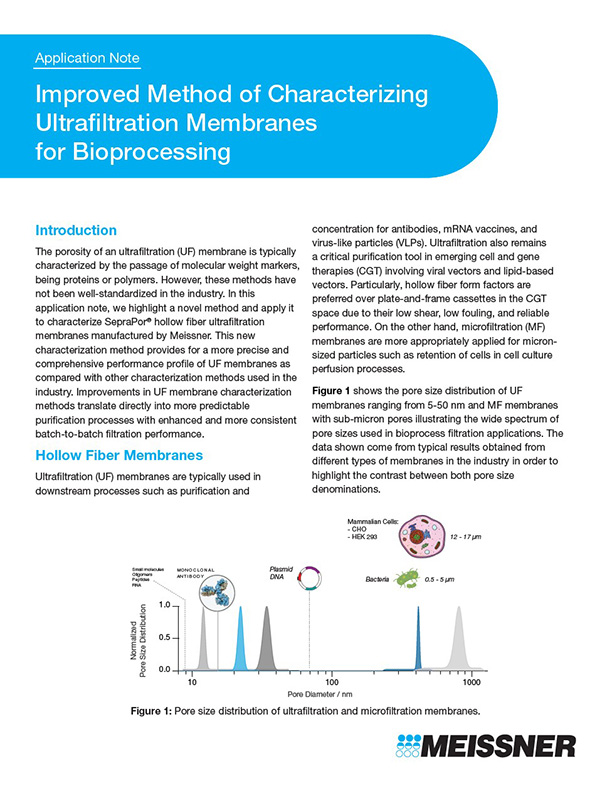
An Improved Method of Characterizing Ultrafiltration (UF) Membranes for Bioprocessing

Tech Updates (INTERPHEX): CryoVault® Bench Top Freezer & SepraPor® HF Filter Portfolio

BioProcess International Digital Week – Improving Perfusion Cell Cultures

SepraPor® Hollow Fiber Membrane Filters Offer Improved Perfusion Cell Cultures

SepraPor® Hollow Fiber Filter Portfolio

SepraPor® Introduction @ BPI US 2020
Frequently Asked Questions
What are Meissner SepraPor® tangential flow filters?
Meissner SepraPor® tangential flow filters are hollow fiber membrane devices designed for tangential flow filtration in biopharmaceutical processes. They are used in applications that require efficient cell retention, concentration, perfusion, and harvest while helping maintain gentle processing conditions for sensitive cell cultures.
What are SepraPor® tangential flow filters used for?
SepraPor® tangential flow filters are used for cell culture perfusion, bacterial cell concentration, mammalian cell concentration, yeast concentration, and high-productivity harvest processes. They are well suited for biopharmaceutical applications where continuous processing, cell retention, and efficient volumetric control are important.
What configurations are available for SepraPor® tangential flow filters?
SepraPor® tangential flow filters are available in capsule and cartridge formats. Capsule formats support single-use and ready-to-deploy applications, while cartridge formats are designed for use in compatible stainless steel housings for reusable process setups.
What is the difference between SepraPor® capsules and cartridges?
SepraPor® capsules are typically used in single-use or pre-assembled process configurations where fast installation and simplified handling are important. SepraPor® cartridges are used in reusable housing-based systems and are often selected when a stainless steel TFF setup is preferred.
What pore sizes are available for SepraPor® filters?
SepraPor® microporous hollow fiber membranes are available in multiple porosity ratings, including 0.1 µm, 0.2 µm, and 0.45 µm options. These pore sizes support a range of cell retention and tangential flow process requirements depending on the target application.
How do SepraPor® tangential flow filters support process scale-up?
SepraPor® filters are available in a broad range of sizes for use from laboratory-scale development through production-scale processing. This allows users to scale tangential flow applications while maintaining the same core hollow fiber membrane platform across different filter sizes.
What sterilization options are available for SepraPor® filters?
SepraPor® filters support multiple sterilization approaches depending on the format selected. Capsule configurations can support single-use sterile deployment, while cartridge configurations are used in systems designed for sterilization methods such as autoclaving or steam-in-place, depending on the process setup.
How do I choose the right SepraPor® filter size for my application?
The right SepraPor® filter size depends on your recirculation flow rate, target shear conditions, process volume, and cell culture requirements. In general, sizing should align with the desired balance between throughput, gentle processing, and efficient cell retention across the intended scale.
What are the main benefits of the SepraPor® hollow fiber design?
The SepraPor® hollow fiber design supports high surface area in a compact format, efficient tangential flow performance, and low-shear processing conditions that are well suited for sensitive cells. It is designed to help users achieve effective cell retention, strong throughput, and flexible deployment in both single-use and reusable system formats.